










by Matthew Konkle
Managing Editor
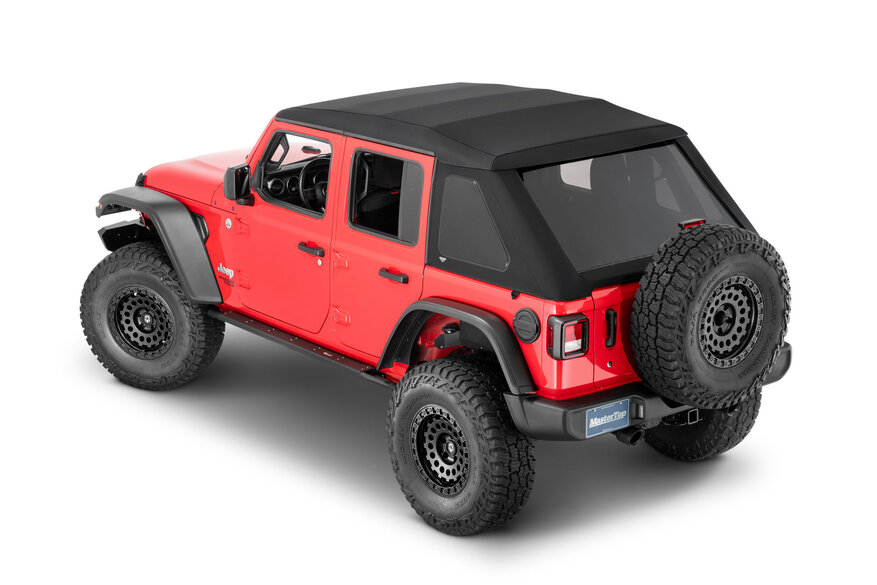
Maybe you first saw it when you were building a Wrangler on Jeep’s website and came across two simple words that describe a Jeep Wrangler's soft top material. Premium or base.
Perhaps it came while researching the best Jeep soft tops to replace your current edition, only to realize that the terminology these days and top material names make choosing something a bit more difficult than, say, just picking one that looks nice.
Stuff like mil rates or ounce thickness, as well as Vinyl, Black Diamond, Sailcloth, and Twill are all out there as terms to totally give your new soft top some character.
That’s right, if you didn’t know already, soft tops are not simply constructed with just one type of fabric. And sometimes trying to decide on just the right one often leads to more questions than answers. Thick or thin? Vinyl or fabric? Which style is best? Or the quietest? Which one matches the factory top?
So before you get paralysis by analysis when looking at all the options, let’s take a few minutes to go over the different types of Jeep soft top materials and see what may work best for you.
And truthfully, there really isn’t one single absolute answer between any of these different material types. Because what works great for one person may not make sense for another. After all, many of us out there use our Jeeps differently, right?
Determining which type is best really ends up like a lot of other vehicle modification choices—meaning it is more of a personal decision that can also fall under the ‘how much do I really plan on using the thing’ rationale.
Here are the different Jeep soft top material options:
Vinyl (Value)

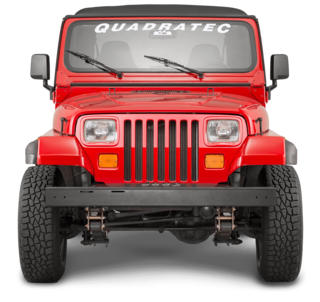
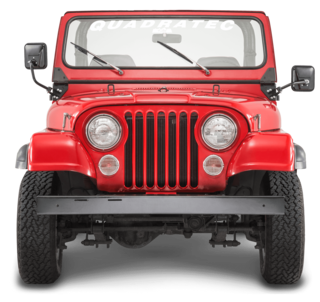
First up is vinyl, which is considered the original soft top material for anyone who owns a CJ, YJ, or many TJ Wranglers. This type of top has a somewhat smooth plastic-like texture and sheen finish, and sports an exterior vinyl layer and interior layer of cloth. Vinyl tops are usually considered marine grade, meaning they are treated to resist the elements while being fairly simple to clean vs. other material tops.
Normally, these tops have an 18 oz. fabric weight that puts the material on the thinner edge of soft top density compared to other materials, while still being considered excellent for weatherability, UV resistance, and durability. However, that thin wall does allow a bit more road and wind noise into the cabin while driving—something other, thicker, tops suppress. Regardless, vinyl does remain a popular look for anyone who loves that sharp, classic appearance.
Black Diamond (Good)

Next up is Black Diamond soft top material, which made its debut on 2003-06 Jeep Wrangler models, and proved popular enough to remain as an industry standard material into the JK version. This material features a sleek, consistent matte finish and is comprised of a durable, heavy, multi-layer vinyl construction designed to easily handle everyday exposure. It offers the same dependable weather resistance, UV defense, and rugged durability as traditional vinyl, but with that added thickness, it has proven quieter and more durable than previous Jeep soft tops.
While original factory versions generally hovered around an 18 oz. fabric weight, Black Diamond options often range from 18- to 23-oz. depending on the manufacturer. This provides a clean, professional aesthetic that hides dirt and road grime exceptionally well, while making post-trail cleanups a breeze. Like standard vinyl, it is an affordable option that sits on the lighter side of top density, meaning it lets in a bit more highway noise than premium fabrics, but remains a top choice for daily drivers seeking a classic, rugged look.
Sailcloth (Better)

This fabric offers three layers of weight, with two exterior vinyl ones for weatherproofing and noise deadening, and an under layer of poly/cotton substrate designed to stabilize and reinforce the overall fabric. All of this combines to form a 28 oz. thick barrier that is 50 percent quieter than regular vinyl or denim. This material does cost more than vinyl or denim, so it may not make sense if your vehicle is merely a weekend driver or trail only, but anyone who is a daily driver certainly will notice a significant difference in ride quality.
Additionally, Sailcloth provides superior weather, UV and abrasion protection, and the material itself also resists temperature-related shrinkage while better protecting against waves or wrinkles. First appearing on the 2001 TJ Wrangler, Sailcloth provides an overall ride quality nearly equal to a hard top, and was considered the most durable soft top of all time.
That is, until Mopar developed twill fabric.
Twill (Best)
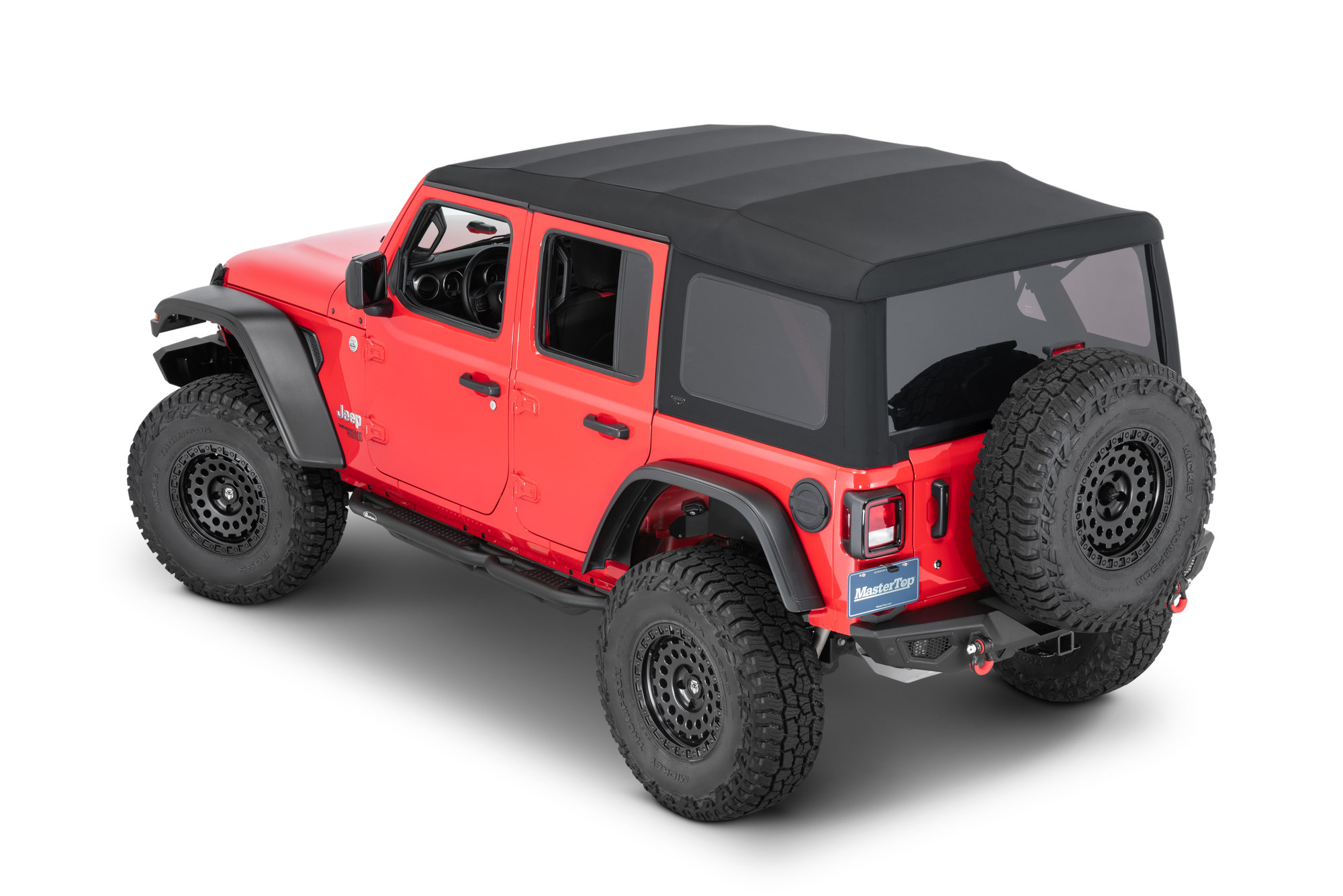
Twill is the best of the best in soft top material, and is something many high-end sports cars and luxury convertible manufacturers utilize for their vehicles’ soft tops. It consists of three material layers—an external twill fabric, a center butyl rubber for waterproofing, and a finished twill on the inside—to achieve an industry-best 30 oz. density.
While this may seem like overkill for Jeep owners accustomed to continual road noise, Twill can actually be a huge benefit for everyday drivers as it provides the ultimate in sound reduction and durability, as well as superior cold weather performance and interior insulation. And yet, despite this ultra-thick material, Twill tops are softer and more flexible than Sailcloth, so they are easier to maneuver and better resist cuts and wrinkles compared to any other top.
Of course, these first-rate features do put Twill tops at the high end of the price spectrum so it is certainly advisable to run a cost-benefit analysis to determine if it is something that fits your overall needs.
Related Articles:
How Do I Remove My Jeep Doors?
Five Important Things To Know Before Going Off-Road In Your Jeep