





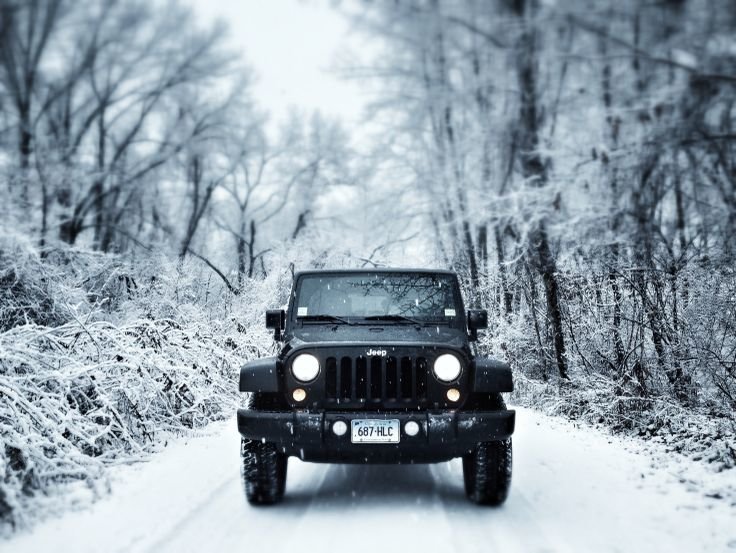
While some of you out there may have dealt with snowy conditions quite a bit this winter, here in the mid-Atlantic region we are gearing up for somewhere around 6-10" of snow Thursday - our first significant accumulation of the season. We know, it is not much in Michigan or upstate New York terms, but it will certainly be enough to make a difference while driving.
And for rookie Jeep owners in stock vehicles, preparing to head out to work or wherever, you may be a bit apprehensive whether to shift into four wheel drive high or low when you need traction in that frozen white stuff. Don't be. It is an important question we get quite frequently this time of year, and it has a pretty straightforward answer.
For snowy roads, as well muddy terrain and other light off road trails - even sand - it is normally best to engage your 4 high setting when needed as it provides power to all four wheels, helping increase your traction while reducing the risk of slipping and spinning wheels. It is highly recommended to use this setting when traveling above 15 miles per hour and below 50 mph in those above conditions. You can also 'shift on the fly' into that 4 high setting when needed, normally as long as you are traveling under 50 mph, although many recommend slowing to under 35 mph to engage 4 high.
In contrast, the 4 low setting should only really be used when you need extra torque at low speeds such as while extreme rock crawling, pulling someone out of a stuck situation, or over an obstacle. Some even compare it to driving a tractor. It is important to note that 4 low should not be engaged on any hard surface with good traction as this can cause damage to the transfer case - and definitely put the transmission into neutral before engaging your 4 low.
Finally, one thing to keep in mind about using either 4 wheel drive setting - you are not invincible while driving when these are engaged. Both 4 high and 4 low are great tools to help get you through most minor or difficult situations, but you still need to use common sense; especially when driving around those who do not have a 4 wheel drive system (but think they do).