












Imagine a late fall Saturday night, the chilly October rain splashing into your face as you frantically unlock your Jeep and dive inside.
You wipe water from your face, adjust the rear view mirror and toss your cell phone into the passenger seat.
As your Grand Cherokee roars to life, you buckle up and shift into gear for the short ride home.
Turning on the main road, you are deep in thought when headlights suddenly spray across your face.
Someone is swerving toward you from the other direction!
You quickly check the right shoulder. Nothing there. So you smoothly veer over and out of the way.
The other vehicle roars past.
Luckily you didn’t panic - having both experience and confidence to respond.
But now imagine this situation with your teen driver at the wheel. Would they handle it the same?
Hopefully.
The truth, though, is many of us may not know. And as jeepers we all need to understand these vehicles we have grown to love can also be a danger to the ones we love as our teens enter driving age.
This week, October 18-24, has been designated National Teen Driver Safety Week by the National Highway Traffic Safety Administration.
It is the perfect time to pull up a chair and review how and what we should teach our teen drivers, as well understanding the potential distractions they may encounter.
Founded in 2007, following a series of fatal crashes in Pennsylvania involving high school students, the National Teen Driver Safety Week aims to create awareness of many risk factors involved with teenage driving.
According to The Center for Injury Research and Prevention at Children’s Hospital of Philadelphia (CHOP), a supporting organization of Teen Driver Safety Week, the first six months after getting a license is the most dangerous time for any new driver.
As parents, we often try hard to combat this danger by teaching our teens the basics of driving like steering, parking, and controlling the vehicle – usually in an empty school or mall parking lot. We also tend to hammer them about road rules and situations.
However, NHTSA statistics show almost 75 percent of accidents involving teen drivers are the result of issues beyond basic driving skills or rules. Errors such as underestimating vehicle capability, poor road hazard scanning, improper speed for conditions, or driving while distracted.
These studies also indicate, while we work hard to teach the basics of driving, less than 25 percent of us actually take the time to reinforce these higher-order driving skills to our teen driver.
For Jeep owners, this is particularly troubling as other factors with our specialty vehicles like ride height, weight, cornering, braking ability, visibility and rollover risk can easily contribute to a potential accident for new drivers.
So it is imperative, beyond simple driving practice, to reinforce how a Jeep’s height makes for better forward road vision, but this higher center of gravity also means a Jeep does not hug the road well and could roll over with sudden movements or quick cornering.
Work with your teen on the importance of smooth turns and lane changes in all conditions. Demonstrate that these larger vehicles can also cause visibility issues on the side or rear. Backup cameras on newer vehicles help, but are not a substitute for careful rearward movement or lane changes.
Let your teen know to keep a safe distance between all other vehicles. This is always important no matter what you drive, but the added weight of a Jeep and its accessories certainly does add to braking distance.
Give plenty of practice time for your teen to drive on progressively harder roads - from quiet streets to a busy highway. In decent weather, as well as rain or snow.
Have them realize that four-wheel drive is definitely a safety feature in certain weather conditions, but is never a replacement for safe driving.
Ask them explain to you, while driving, if they feel they are giving the proper distance or are traveling at the safest speed for conditions.
Make them drive unfamiliar roads to sharpen recognition of potential road hazards. Hazard perception is a particular problem for teens as they have not developed the ability to ‘scan ahead’ to detect potential problems.
And stress the importance of common sense as much as everything else. This includes things like seat belt use at all times, no cell phones, no food or drink, and emotional control at the wheel. Of course, this also means no alcohol while driving. Ever.
Plus, make sure they only practice driving with you and no other passengers or loud music. Research from CHOP shows other teens in the car and loud music are the top two distractions for teen drivers.
As you do the above, remember that focused driving practice can be as stressful for your teen as for you.
While there may be plenty of ‘white knuckle’ riding ahead, try to refrain from arguing while driving or being too critical.
Ask open-ended questions to your teen, in a normal tone, about their driving. Process answers without judgment and respond how their driving made you feel.
For example, if they had to swerve to avoid a braking or stopped car then ask them how they think it was handled. Respond with something like “when you don’t pay total attention to the road, it worries me. I get concerned this may become a habit.”
A 2012 study by the University of Iowa linked a 21% drop in risky teen driving behavior when teens were calmly engaged this way, compared with a control group.
Finally, realize teens have a lot to learn when they begin the driving process. Even after several months of supervised practice, over 54% of them still make mistakes while driving such as hitting a curb, running a stop sign or pulling out in front of oncoming traffic.
So take your time with them and do not let them rush you into unsupervised driving even after they receive their license, if you are not comfortable. Talk with your teen and come to an agreement.
Research shows that with consistent, cool and calm interaction about all types of driving situations, as well as attentive and structured practice, their mistakes will drop off dramatically after the first few months.
This way, when you imagine whether your teen has the ability and confidence to respond if those headlights are coming at them, you will know the answer.
Yes. Yes indeed.
Learn How to Modify, Repair, and Enjoy your Jeep Vehicle from the Experts at Quadratec
Teen Driver Safety Week: Smarter Teen Driving starts with Parents

Comments
Top Jeep Articles

- September 28, 2026
- 6 min read
Hardtop Questions, Real Answers — Everything You Need to Know Before You Go Hardtop
- September 25, 2026
- 3 min read
From wartime Willys prototypes and early CJs to today’s JL Wrangler and JT Gladiator, this guide decodes the letters behind Jeep’s most familiar vehicles.
- September 24, 2026
- 3 min read
You do not need a new lift kit, a week off, or a famous trail to remember why you bought it. Start with an afternoon and take the long way home.

- September 23, 2026
- 5 min read
Sun exposure gets most of the blame, but cleaning products, salt and everyday wear can also change a cover’s color. Here’s how to spot the cause and slow the fade.
- September 17, 2026
- 6 min read
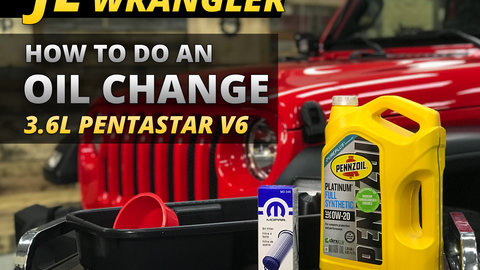
How to do an Oil Change on a 2018 and newer Jeep Wrangler JL 3.6L Pentastar V6
- September 15, 2026
- 5 min read
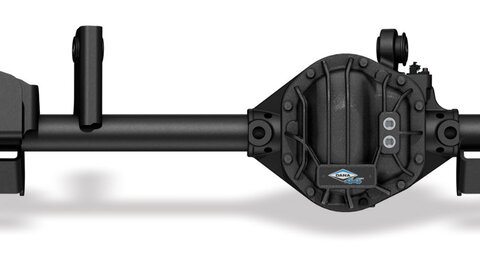
For anything from simply changing out the differential covers, to replacing the entire axle, it is always good to know exactly what you have under the vehicle. But not everyone knows, especially if you bought the vehicle used.