










by Scott Ammerman
Torque Senior Correspondent
Halogen lamps used to be the undisputed king of incandescent lighting, and faithfully enjoyed that title for over a century. Invented in the 1890s, this new technology allowed bright light throughout the bulb’s life and no darkening inside the bulb as it aged - due to the presence of halogen gas inside the bulb itself. This was a significant upgrade from the acetylene-powered lamps (almost like a Coleman camping lantern) they replaced.
This new halogen bulb was great for automotive use, as it made for high intensity light in a small form factor that could be reflected to focus it (essentially a metal half dome), and aimed at the road’s surface at night. As the years went on, halogen lights got brighter, but the higher the bulb wattage, the more heat was generated. This led to shortened bulb life, and the maximum wattage for driving on public roads in the US was limited by the Department of Transportation at 55 watts for low beams and 65 watts for high.
Sealed beam halogen headlamps were created to normalize the sizes used, and the entire unit was replaceable in the event of bulb failure. Later on, bulb lights themselves could be replaced – making the entire process even easier as they used various types of halogen units.
In the past 15 years or so, projector style halogen headlights and fog lights have come to the forefront, focusing the useable light generated by low wattage bulbs into a more useful and efficient beam. These most often look like glass globes, and are much more efficient with beam cutoff and focus. Replacement bulbs are often coated to eliminate some yellow aspects of the beam’s light, using terms like “hyper-white” or “silver-blue” to indicate what color you would expect. These coatings can eventually wear off, and the dimmer yellow light is back.
Full disclosure: my night vision is terrible, so I've upgraded the headlights in nearly every vehicle I've owned. I would change the halogen bulbs to “higher than legal” wattages, and add relays and heavy gauge wiring to compensate for the added draw on my vehicle’s electrical system. In some cases, I even imported European H4 headlights to replace sealed beam original equipment.
This made oncoming drivers hate me. Due to the limitations of halogen reflectors, the only way to create more usable light was to push the wattage past the limitations of legality.
My last several vehicles have all had Xenon projector headlights, and the output was adequate enough that I left them alone. In addition to much longer bulb life, the color temperature was more like natural sunlight and not yellow tinted like halogen lamps. The drawback of HID lighting, though, is bulb cost when they do need replacement (typically well over $100), and an additional ballast that increases voltage and can eventually fail.
Buying HID “retrofit kits” for halogen reflector lights may seem like a feasible idea, but is really an unsafe move as the light scatter is terrible. You’ve probably even passed some of these on the road at night and noticed that the bulbs are bright, but not much of the light ends up where it needs to be. Projector lights are less finicky about being retrofitted, but are still not as good as an engineered solution.
Until recently, Halogen and Xenon/HID were really your only two automotive lighting options. HID was the clear winner, but full housing kits to add Xenon lighting to a standard vehicle were expensive - if they were even available. Driving and off-road lights were available, but weren’t exactly cheap.
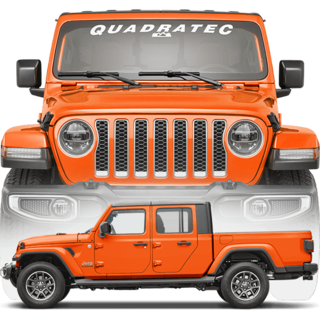
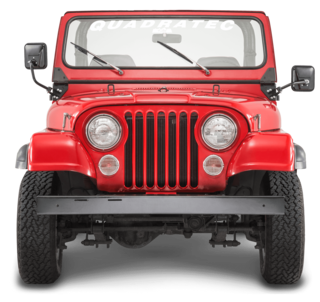
So how does all this information tie in with Jeep vehicles? Well, Jeep Wranglers produced in the last several years still use outdated, replaceable bulb halogen reflector technology; essentially the same stuff we’ve been using in cars for over a century.
But recent advancements in LED (light emitting diode) technology have completely surpassed the efficiency and light output of halogen by leaps and bounds, and rival the improved output of Xenon lighting. All with a longer service life and a cost far lower than it was before.
LEDs have a very low amp draw compared to both halogen and HID, and this allows you to simplify the installation in many instances; not having to worry about straining factory wiring and switches as you do with higher draw accessories. They are extremely durable as well, with many higher end options being rated for 50,000 hours of usage before failure.
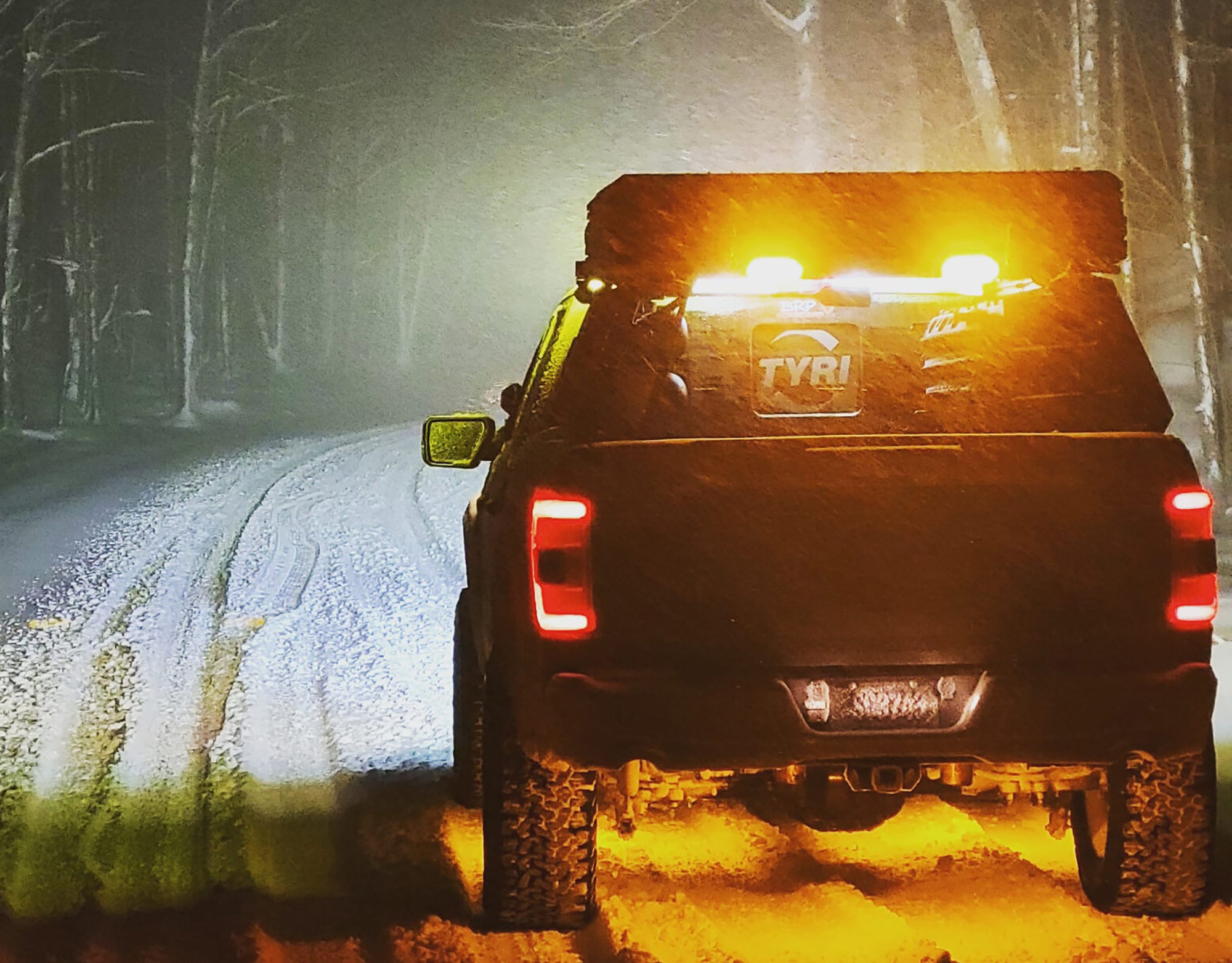
They aren’t even being used exclusively for forward-facing lights, as this TYRI Off-Road VL4 Amber LED unit is set up as a high-mounted reverse or third brake light.
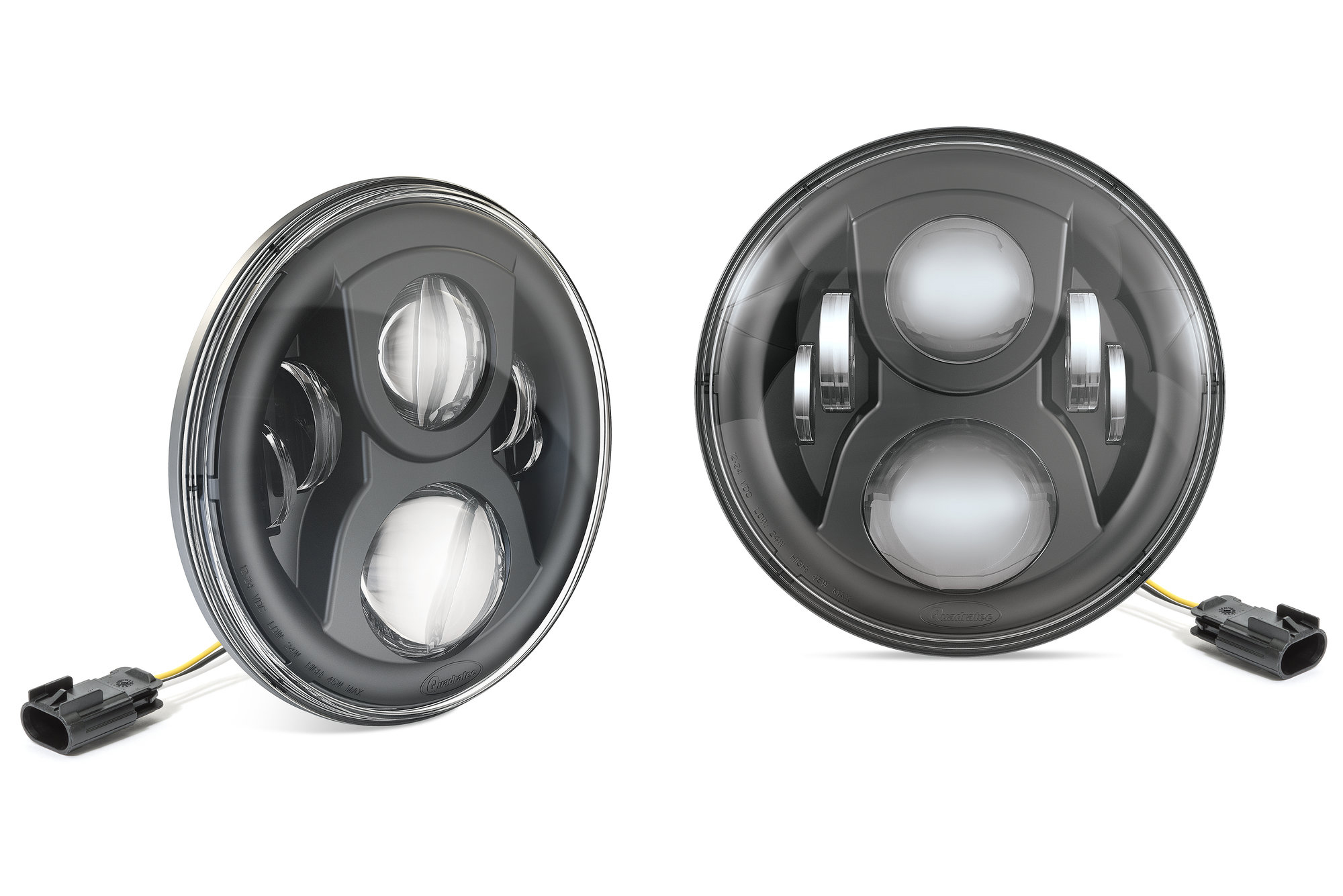
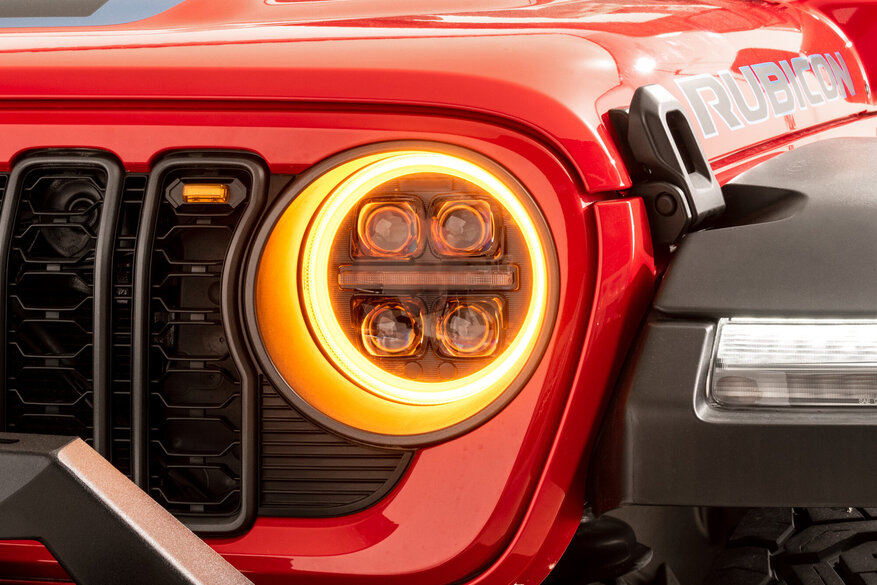
Additionally, the Quadratec Premium LED Projector Beam Headlights are an example of Projector LED lights.
Does this all sound too good to be true? It sure feels like it is because the benefits are vast. But the major drawback to quality LED lighting versus halogen is still cost, even though that cost has reduced dramatically over the past few years.
LED components are very easy for manufacturers to get their hands on. The actual diode that produces the light is cheap and mass-produced. Higher end lighting manufacturers get their elements from high quality producers that have exacting quality control and then design their enclosures to be durable, weatherproof and dissipate heat well (usually through a finned metal structure behind the light). LEDs do create heat, but not from the actual element as bulbs do, so LED lights will be cool to the touch on the lens side.
Because of the low cost and availability of components, if you don’t care about quality (particularly ones that the higher end buyers would avoid), a flood of LED lighting manufacturers have popped up; many making very low end products. They look a lot like the real thing, but they take on moisture inside the light, have coatings that degrade rapidly and the electronics powering the LEDs don’t last as long as they should. In short, you really do get what you pay for when it comes to LED lighting.
Knock-off lights might cost a third of what genuine ones do, and some even light up in every color of the rainbow, but where the rubber meets the road (or off-road in this case), do you depend on your lights to work? I know I do.
Recommended Reading:
Top Five Recovery Gear Products
The New Jeep Owner’s Handbook: What You Need to Know From Day One