











Chat with us, powered by LiveChat Dispatches On The Road To Johnson Valley: Tuesday in Moab | Quadratec Skip to main content
Blog

by Matt Konkle
Torque Editor-in-Chief


Most people come to Moab, Utah for the outdoor stuff, right? Off-roading, hiking, mountain biking, etc.

And why not. The place is packed full of everything the avid outdoor lover could want.

But while iconic trails like Hells Revenge, Steelbender and Top of the World tend to dominate attention, there are many other attractions just under the surface begging for a few minutes of your time as well.

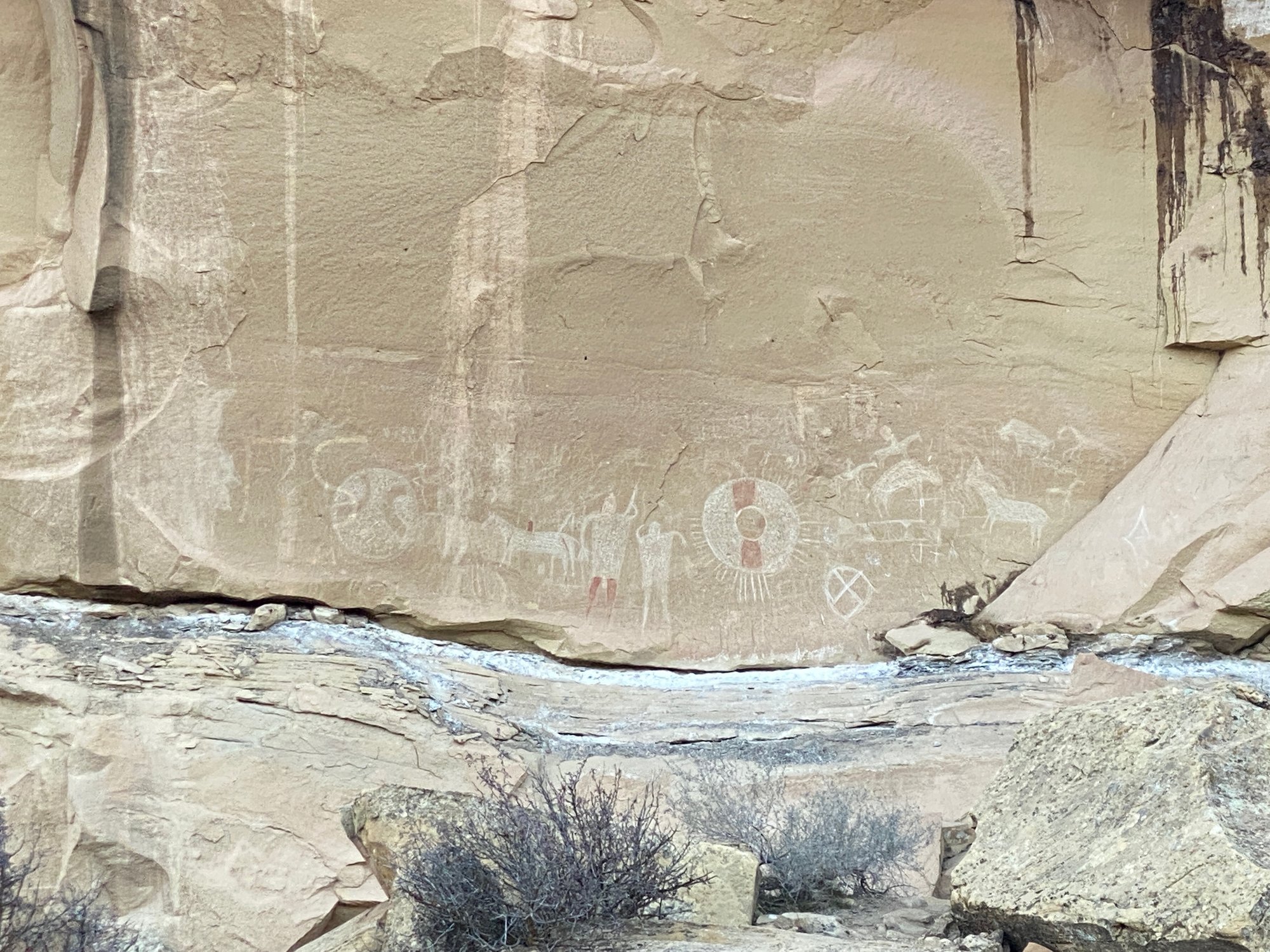
So, to end today's road trip to Johnson Valley, we made a quick-hitter pit stop trip into Moab, stopping by Sego Canyon along the way to visit the oldest petroglyphs in the world.

These mostly ancient artistic drawings are not in Moab proper, instead living a short trip off exit 187 on I-70, northwest of Cisco and just north of Thompson Springs. The canyon itself is about 30 minutes north of Moab.

Some of these art pieces have been carbon-dated to more than 15,000 years ago, while others are more recent.

Some also beg the question of "just what the heck are they", and how did they come up with ink or coloring that bleached so well into that rock face?

These petroglyphs are depicted in several different ‘panels’ around the canyon titled Ute Historical, Fremont Style, Barrier Style and two additional panels.

The Fremont culture thrived from A.D. 600 to 1250 and was contemporary with the Anasazi culture of the Four Corners area. There is also rock art from the Archaic period dating from 7000 B.C., the Barrier Canyon period from around 2000 B.C., and the Ute tribe dating from A.D. 1300.

Just another example, like dinosaur bones and footprints around the area, of how Moab adventures can be more than the rote off-road, mountain biking and hiking expeditions.

Top Jeep Articles

Green Jeep Gladiator with desert red background
  • June 9, 2026
  • 5 min read
Top 5 Auxiliary Lighting Upgrades for Your Jeep Wrangler or Gladiator
Whether you're navigating dark trails, setting up camp after sunset, or simply improving visibility on back roads, these auxiliary lighting upgrades can completely transform how you use your Jeep after the sun goes down.
READ MORE
  • June 3, 2026
  • 5 min read
Congratulations, You’ve Joined The Wrangler Family: Now Check These Things First
From square-headlight YJs to high-tech JLs, here’s the real-world used Wrangler inspection guide every new Jeep owner should read before the next trail ride, road trip, or late-night parts order.
READ MORE
  • May 29, 2026
  • 5 min read
Five Reasons A Jeep Bumper Should Be Your Next Upgrade
Rugged, durable aftermarket Jeep Wrangler bumpers offer much more than just a safety upgrade over the factory version — making them ideal for an inaugural upgrade option.
READ MORE
Red Wrangler on a white background
  • May 27, 2026
  • 5 min read
Jeep Bumper Questions Answered: Everything Wrangler Owners Need to Know Before Upgrading
Not all aftermarket Jeep bumpers are created equal. So if you are in the market for a new one, here are some common-sense answers.
READ MORE
Green and black Jeep against a rocky background
  • May 26, 2026
  • 4 min read
Jeep Wrangler Scrambler Details: Future Performance & Plans
New reports on Stellantis’ long-term roadmap suggest Jeep is preparing a dramatic expansion of its off-road and performance lineup, including a revived Scrambler pickup, the return of SRT models, and a gas-powered version of the upcoming Recon.
READ MORE
  • May 25, 2026
  • 5 min read
Jeep Death Wobble Q&A: Causes, Symptoms, Fixes and How to Prevent It
Learn what death wobble is, why it happens on solid-axle Wrangler and Gladiator models, and the exact components to inspect for a safe, lasting repair.
READ MORE
  • May 19, 2026
  • 4 min read
Memorial Day Jeep Adventures Start with Preparation, Responsibility, and the Right Gear
From trail recovery gear and camping essentials to responsible off-road practices, here’s how Jeep owners can prepare for a safe, adventure-filled Memorial Day weekend while helping protect public lands for future generations.
READ MORE