








by Matthew Konkle
Managing Editor
Jeep owners love scouring catalogs, as well as the internet, to find all kinds of modifications they can make on their vehicles before heading off-road. Things that lift, things that add strength and protection, as well as things that can help prevent, or assist, in a recovery.
And while all those items are great to purchase and install, perhaps the best thing anyone can do to their vehicles when trail riding is something that can't be seen.
Air.
Specifically, the air inside a Jeep's tires.
From the moment you first brought home your Jeep, you’ve probably been told to keep those tires inflated to the proper amount, right?
And if you haven’t, well, it is probably a good idea to start. That’s because maintaining proper tire pressure helps manage tire wear, promotes safety and can even boost your Jeep’s fuel mileage. It only makes sense — after all, tires can take up a chunk of the modification budget so why not make sure they last as long as possible.
That advice doesn’t go away the minute you take the Jeep off-road, either. In fact, it is even more important to follow when your vehicle comes into contact with loose dirt, sand, mud, snow, rocks, tree stumps and all the other good stuff found on the trail.
Having an incorrectly high road tire pressure when four-wheeling will not only make for a rougher ride, but it could easily damage the tire and quickly end your day in the wilderness.
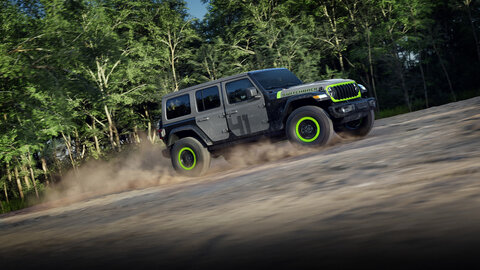
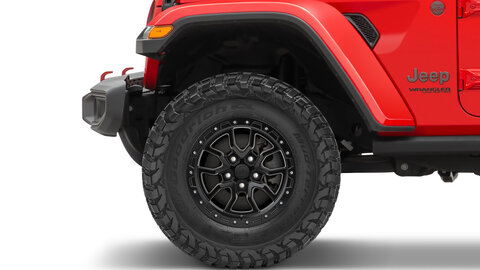
Releasing air in your tires, commonly known as airing down, allows your tires to adapt to the surface by supplying more rubber for an improved grip. This way, instead of your tires sinking into the soft sand or dirt, those deflated tires somewhat ‘float’ on the surface as you drive around — keeping you moving forward instead of moving down. Additionally, lowering the tire pressure provides more tire area against rocks, tree stumps or other obstacles you are trying to overcome. That extra traction definitely makes a difference you can feel when climbing over something.
Dropping that tire pressure will also take a lot of the sting out of trail riding. Stuff like ruts, smaller rocks and other bumps are much easier on your vehicle, and your body, when you have properly inflated tires.
Finally, utilizing the correct tire pressure when off-roading helps reduce wheel spin and prevents trail erosion. After all, besides overcoming all those trail obstacles, we also want to tread lightly whenever we are off pavement, right?
So how does this whole air-down business happen because, unless you've installed some aftermarket device, your vehicle does not offer a button that instantly raises or lowers tire pressure.
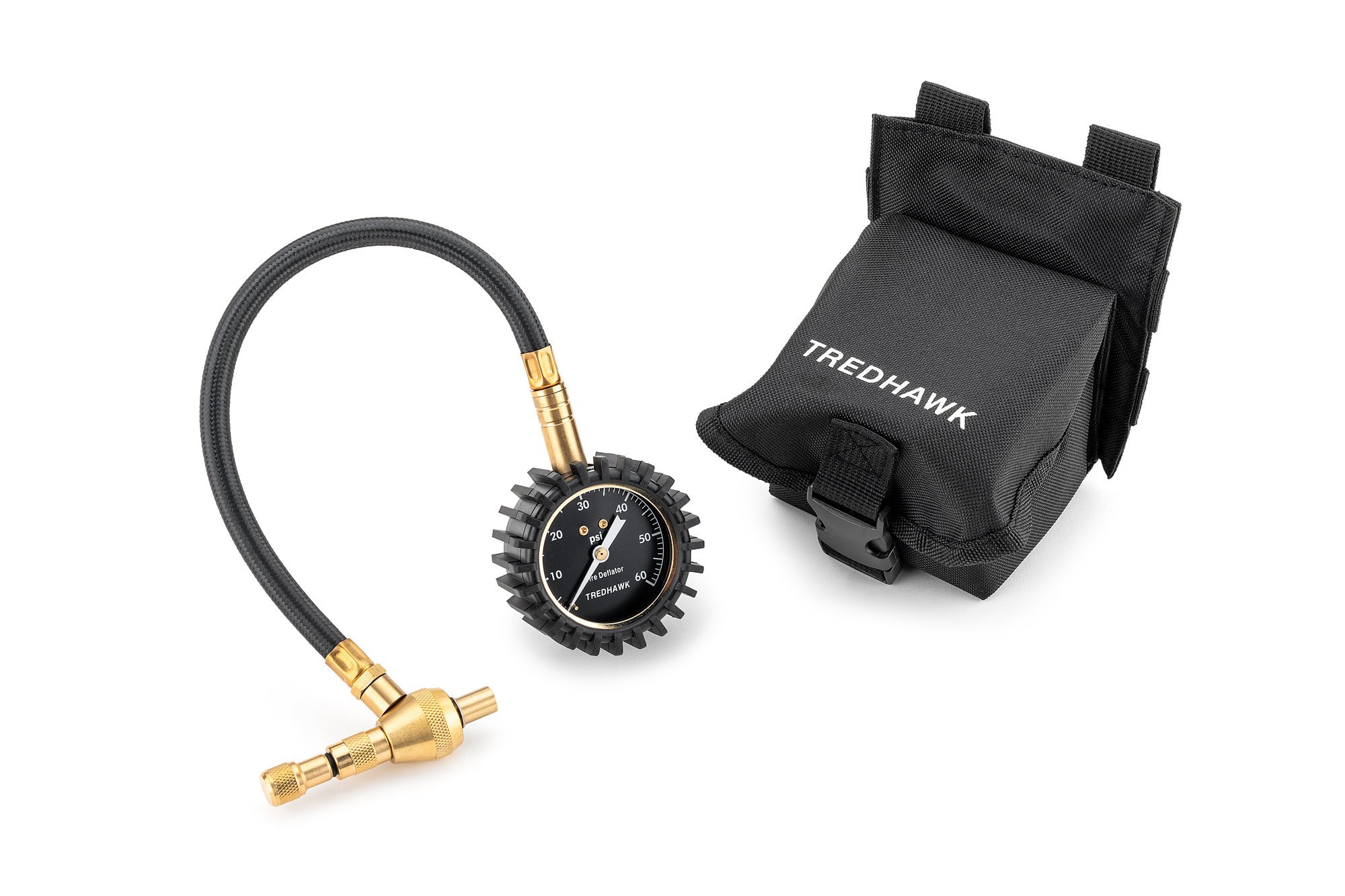
Well, the easiest and most common way is to use a deflation device like the Tredhawk Rapid Tire Deflator. These are handheld units where you attach the chuck to your wheel’s valve stem and drop that pressure. Most come with either an analog or digital gauge so you can occasionally check the current pressure until you reach your desired amount. The drawback, though, is you can only work on one tire at a time so deflation can take a while — especially for those with larger tires.
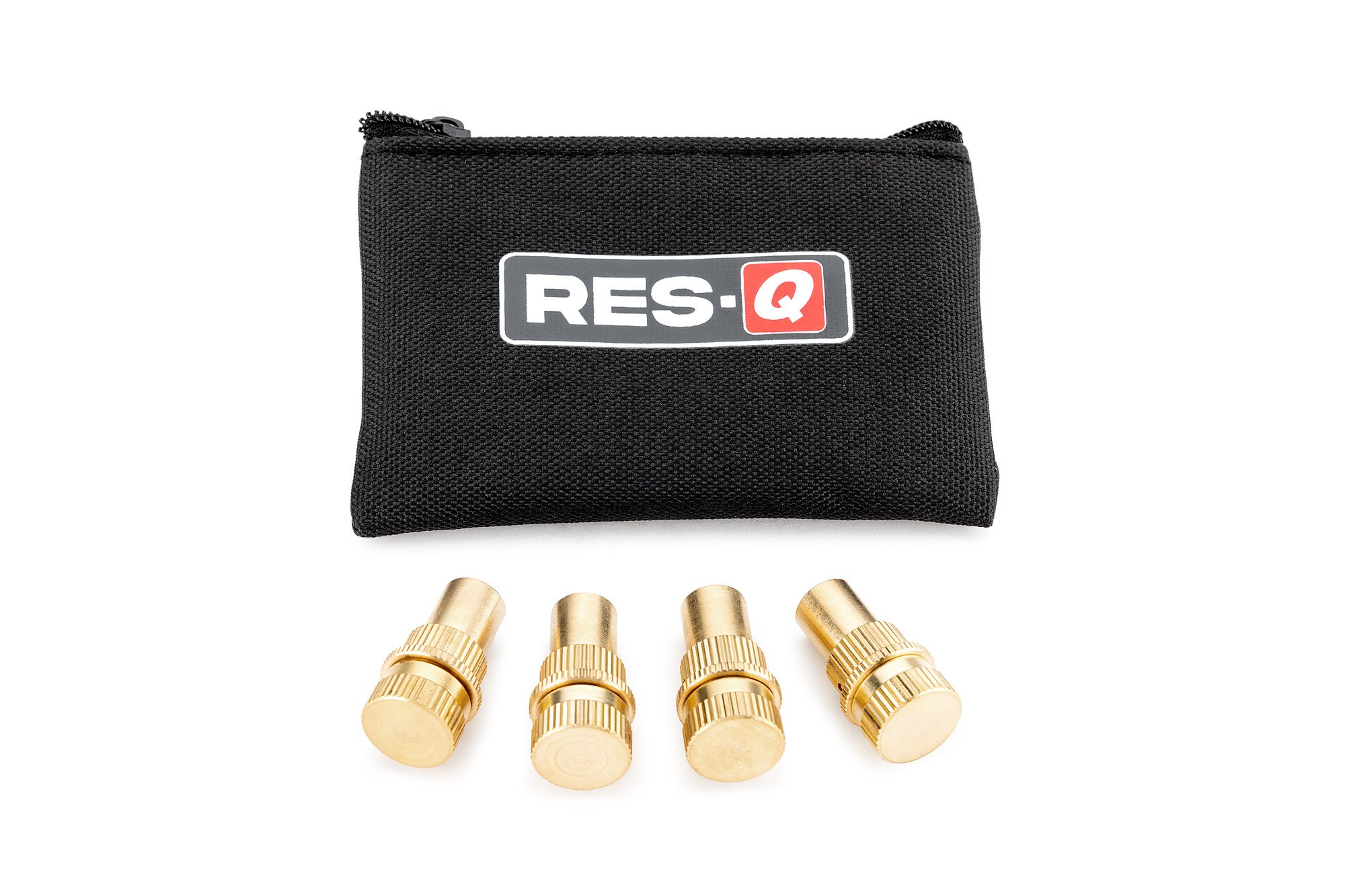
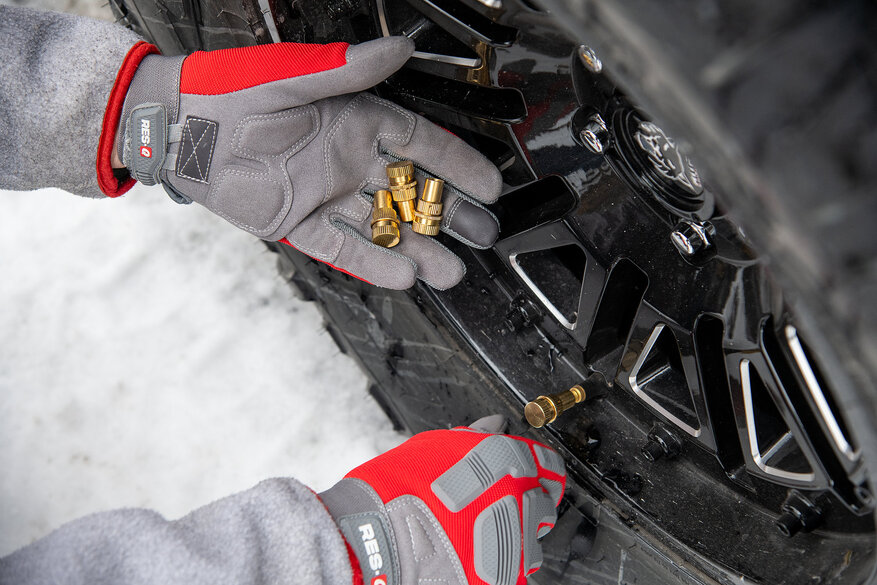
A good way to speed up that process is with automatic tire deflators from Res-Q, JT Brooks, Rugged Ridge, or Rampage. These products come in a handy four-pack so you can screw one on each wheel and deflate everything at the same time. Plus, you can calibrate some of these deflators to stop at a certain pressure level, so you don’t have to worry about airing down too far. Once you reach your desired pressure, air will stop releasing and you simply unscrew the deflator for storage.
While both of these deflator types will work for anyone, there are some higher-end kits to consider if you are planning on seriously expanding your off-road time.
Powertank offers its Monster Valve Kit kit that does require you to drill a second hold in your wheel to attach, but significantly decreases deflation (and inflation) time.
Up Down Air also has a product that, when installed, has lines to connect to all four tires so you can air down with the push of a button. The unit includes a gauge that gives you current pressure so you know when to shut it down.
No matter which product you choose, the trick to airing down is not to lower pressure too far, as tires that do not have enough air can easily pop a bead which will also grind you to a halt. Lower tire pressure can also expose the tire’s sidewall to a puncture on sharper surfaces like rocks.
How much air to release is not a hard rule. It depends on trail conditions as well as your wheels, as those with beadlock rims can air down into the single digits without much of an issue. For most, it really depends on the surface and the final tire pressure is something you can play around with a bit. Ideally, you’ll probably want to be somewhere between 14-18 pounds per square inch for off-road use, but you can start a bit higher and see how the vehicle performs. If you need to take a bit more air out, then you certainly can adjust.
Also, remember that low tire pressure goes together with low speed. So when you air down, take things slow on the trail. No one gets an award for the fastest Jeep over an obstacle.
As far as when to air down – right at the trailhead before you head out for the day is the best policy. Don’t be that person who waits until the trail ride gets going before mentioning you need to stop and air down.
Finally, airing up when the ride is over is just as important. Make sure not to put the Jeep back into two-wheel-drive and simply head home, as high speeds and low tire pressure can be a major safety issue. Some off-road parks will have airing stations you can use to refill, or you can scout ahead and learn where the nearest gas station is from the trail.
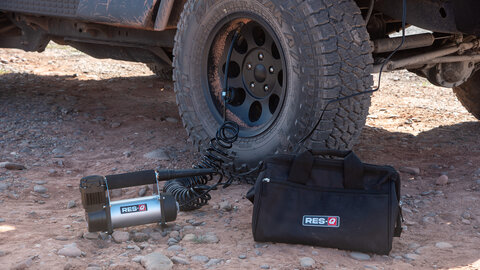
Or, invest in an air compressor or air system like a Powertank, ARB or Up Down Air, so you can make sure you are properly inflated for the trip home after a fun time off pavement.